MUSIC
The Siren and the Wordsmith (2025)
Grief as Liturgy, Love as Myth, Truth as Moral Architecture
The Siren and the Wordsmith is the most literary and emotionally ambitious work of Jules Taylor's career, a concept album exploring grief, addiction, love, and existential confrontation through the language of mythology and philosophy.
At the center of the record is the Siren, a mythological transfiguration of Taylor's former partner, Brewer, who died of cirrhosis in 2024. Their relationship was marked by tenderness, volatility, and ultimately, loss. Songs that Taylor had previously set aside took on new meaning following her death. Rather than rewriting them, he returned to the material with a different understanding of its significance, transforming a deeply personal history into a larger meditation on love, mortality, and the limits of human agency.
Drawing inspiration from Dante's Divine Comedy, the album unfolds as a journey through descent, confrontation, reckoning, and reflection. Brewer becomes a figure reminiscent of Dante's Beatrice, not as a promise of salvation, but as the symbolic center of a journey toward understanding. Throughout the record, Taylor challenges inherited ideas of faith, morality, and redemption, asking what remains when love cannot save us and the divine offers no answers.
Songs such as “Before I Pray,” “If I Were the Devil,” and “Urgent with God” confront the contradictions of religious belief and moral authority, while “Narrowly Survived,” “Easier,” and “Quit You” examine the enduring consequences of grief, dependency, and emotional attachment. Taylor's interpretation of Tim Buckley's “Song to the Siren” becomes a requiem within the album's mythology, while Jimmy Martin's “Twenty Twenty Vision” grounds its philosophical weight in the plainspoken heartache of traditional bluegrass.
The title track brings the album's central metaphor into focus: the Siren calls, the Wordsmith follows, and what survives the wreckage becomes the substance of art. The relationship between love and destruction is neither romanticized nor resolved. Instead, Taylor examines the human impulse to seek meaning in experiences that resist explanation.
Musically rooted in dark Americana, folk, and traditional country, The Siren and the Wordsmith favors intimacy and restraint over elaborate production. Its arrangements provide space for Taylor's stark lyricism and the emotional weight of the performances.
Ultimately, The Siren and the Wordsmith is not a record about finding closure. It is about learning to live with what cannot be repaired, confronting the limitations of faith and love, and transforming personal grief into something that reaches beyond the individual.
It is a work of remembrance, philosophical inquiry, and artistic transfiguration—a reckoning with the cost of loving what cannot be saved.
The Siren and the Wordsmith
The Siren and the Wordsmith, live in Fulton, TX 9-19-25
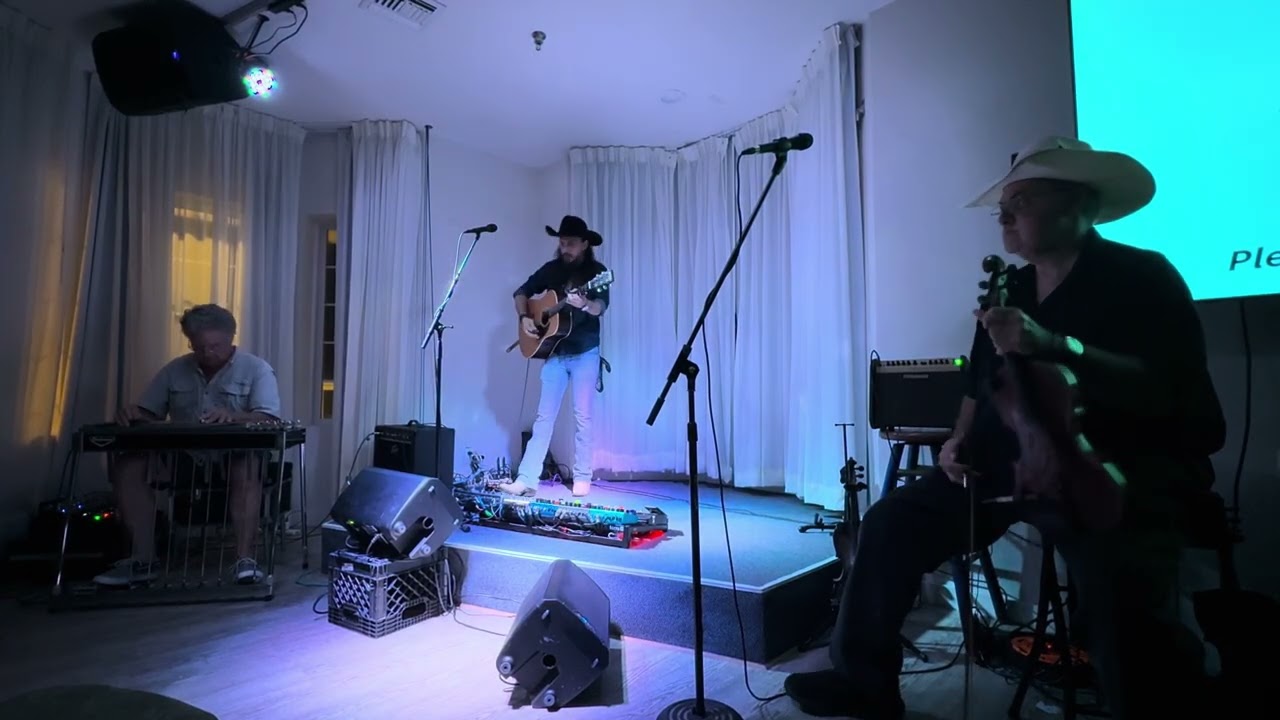
The Siren and the Wordsmith, live in Fulton, TX 9-19-25
The Siren and the Wordsmith, live in Fulton, TX 9-19-25

Song to the Siren - Live at Fulton, TX 9-19-25


"Taylor’s economy of melody and intuitive feel for the shape of verses and phrases recalls such heroes as Dylan and Van Zandt. Despair, dissolution, and an occluded sweetness are the very DNA of these dark-side Americana ballads… Whiskey Clear is whole-cloth and all-in conceptually… The cat really means it."— John Burdick, Hudson Valley One
Whiskey Clear feels less like a performance and more like a long night’s talk when the bottle is low and the hour is late. The songs don’t aim to dress up loss or disguise regret.
Recorded with longtime collaborator Jon Light, the album keeps its frame simple and sturdy. Taylor’s voice carries the weight of someone who has seen more than he can fix, but keeps on anyway. The melodies are spare, the words pared down to the bone. What remains is durable, unpretentious, and honest — the kind of truth that doesn’t fade with time.
Whiskey Clear doesn’t reach for grandeur, and that’s its strength. It stands steady, like a fencepost on the back forty: weathered, scarred, but still holding.
Press Release for Whiskey Clear
“When the pain of staying where you are exceeds the pain of changing your situation and when you finally reach the point of seeing clear who is a victim and who is a villain; when you finally decide to remove yourself from a situation or make a difficult commitment toward staying the path; when you drink until you black out but right before you lose consciousness you have a moment of clarity. In that liminal space of slowing our thoughts down enough to notice what we haven’t ever noticed before, we are informed in new and revealing ways that allow us to move past whatever was holding us back. Some of us drown in the bottle and some of us put the bottle down. Wherever you are, I hope you are surrounded by those who love you and wish for you to do the latter.”
— Jules
The Story Behind the Recording of the Album
Recorded over the course of two days in the Catskill Mountains of Upstate New York at Magnetic North Studios, Whiskey Clear has no overdubs and no more than two takes per song. New York-based pedal steel guru Jon Light performed with Jules in the same room without much isolation between them and was his sideman for years in the Hudson Valley. Engineered by Tod Levine, this was a departure from the recording methods and timeframe allowed during the creation of their last partnership, Mountain Time.
“I spent two years creating Mountain Time, so when it came time to record what Jon and I were doing live, I was in a place where I had a severely reduced reservoir of patience.”
Whiskey Clear was intended for release in the spring of 2020, but plans for its release were offset by the pandemic and ultimately, the album in this form never saw the light of day. Fans will recognize the tracks “Goddamn Carolina,” a song about pining for love and springtime during the coldest days of winter, and “Chasing One More Line,” a song that likens a writer’s need for a poetic line to the habits of a drug user chasing a fix.
Jon Light’s pedal steel guitar greatly assists with delivering an overall vintage country sound to Whiskey Clear. The album begins with a count-in from Jules and by the second track, Light’s pedal steel is playing these interesting trade-riffs in the chorus that will compel listeners to revisit “Heart of Stone” before listening further. Songs like “Jim Beam for Breakfast” and “Soul That Bleeds” speak to themes of despair and substance dependency, and Light’s pedal steel is right there riffing on Taylor’s vocals in playfully melodic and, at times, delicately whispered accompaniment.
Taylor’s intentions from the start of recording Whiskey Clear were to arrive at an imperfect product. Retaining all those small pieces of a performance in toto is perhaps an act of courage in today’s age of hyperproduced media. If this album could be described as “stripped down,” it is in line with a philosophical return to the original intent of creating a record—as in a record of what took place in a room on that day.
Whiskey Clear
Whiskey Clear

Jules Taylor - Soul that Bleeds (Live at the Station) 1-18-19

Jules Taylor - Carolina King (Live at the Station) 1-18-19

Jules Taylor featuring Jon Light - "Common" - Live at the Anchor in Kingston, NY
Mountain Time — Album Review
By Paula Cummings | NYS Music | May 15, 2018
“I’m not trying to find a new sound,” Jules Taylor says, “I’m just trying to find myself.”
It took Taylor two years of introspective soul searching and relentless experimentation with sound to achieve this ambitious goal, but what’s two years in mountain time? Life in the mountains moves at its own pace, measured by seasons of the year and counted in generations. It also offers a vantage point for gaining perspective. Mountain Time transcends space and time to map the terrain of Taylor’s meandering journey from his roots in the Southwest all the way up to the Catskills.
Mountain Time starts with “Pining,” a song steeped in the rhythms and imagery of nature. “As long as the willow’s been weeping, as long as the sky’s been blue,” Taylor drawls, “As long as the sun’s been rising, you know I’ve been pining for you.” His vocals are as weathered as an old highway sign and as inviting as your favorite mom and pop diner. Taylor’s genre, like his accent, is hard to pin down because it’s as unique as a thumbprint. The best way I can come up with to describe it is eclectic Americana, with some songs leaning towards southern rock and others towards alt-country.
Jules Taylor spent two years thoughtfully arranging the music on this album. His search for authentic expression led to the use of roots instruments including lap steel, dobro and mandolin, in addition to piano and guitar. The music sets a backdrop for adept storytelling. “Long Way to Abilene” takes one meandering through the back roads of the Southwest. Taylor contemplates his life in “Cradle to Grave,” and searches for faith in “True Religion.” The album ends with the bittersweet ballad “Carolina King.” Overall, the collection is the musical equivalent of the Great American Novel: a work that captures what it means to be human – the shortcomings and the triumphs, the heartaches and the joys.
Taylor has dedicated this, his third album, to his mother Lamar Ortiz. It was released on May 14, her birthday, and also the day following Mother’s Day this year. More information about Taylor and his work can be found on his website.
Mountain Time was produced, recorded, engineered, and mixed by Taylor alongside Tod Levine at Magnetic North Studios in Saugerties, NY. Session musicians included Dan Cartwright and Matt Bover on drums, and Colin Almquist and Alison Damrath on bass.
Original publication: NYS Music
Author: Paula Cummings
Publication date: May 15, 2018
"A kind of high-drama ambient American rock with equal parts grit and ether. Its affinities are many: Wilco, Calexico, Ryan Adams, Drive-by Truckers, Neil Young…do I need to continue? What the references don’t necessarily suggest is how nicely crafted and layered these relatively crunchy, hard-rocking tracks are: dark, shimmering, electric desert snarl; good stuff, well-played and even-better-conceived. It is not hard to imagine any of these songs showing up in a stylized modern Western." - John Burdick, Hudson Valley One
"Mountain Time isn’t something you hear too often nowadays, and I do mean that as a compliment. This is a record I could see my Dad playing through the stereo while working together in my childhood garage. It’s a record to drive through the flat-plained area of the country with. It’s white-collar in blue-collar clothing." - TJ Foster, DigitalWheatPaste.com
Mountain Time
Mountain Time

Jules Taylor - Long Way to Abilene - Live at Love Bites - 5/19/18

Mountain Time Album Trailer

Jules Taylor - Cradle to the Grave - Live at Love Bites - 5/19/18
Alone and Solo V1 (2016)
Album Notes
Alone and Solo V1 documents an early chapter in the musical development of Jules Taylor, capturing a period of experimentation with live looping and the possibilities of the solo performer.
Drawing upon his background in recording engineering, traditional musicianship, and a restless creative curiosity, Taylor began exploring ways to construct elaborate musical arrangements in real time. Using guitar, voice, and a looping system, he developed an approach that allowed a single performer to build rhythmic foundations, layer instrumental passages, and create the dynamic range of a larger ensemble without additional musicians.
Recorded live at Rockwood Music Hall in New York City in 2016, the project consists of fourteen performances, each captured on both audio and video. The recordings preserve the spontaneity and imperfections inherent in live performance, documenting the intersection of musical composition, improvisation, and technical experimentation.
Unlike traditional multitrack recording, where performances can be assembled and refined over time, live looping requires the musician to make creative and technical decisions as the music unfolds. Taylor's experience as a recording engineer became an integral part of the performance itself, blurring the distinctions between musician, arranger, and producer.
Viewed within the larger context of his discography, Alone and Solo V1 represents an early exploration of ideas that would continue to inform Taylor's work: the relationship between technology and traditional musicianship, the creative possibilities of independent performance, and the pursuit of new ways to present songs to an audience.
More than a conventional live album, Alone and Solo V1 is a document of artistic experimentation, capturing a songwriter and engineer discovering how much could be accomplished by one musician occupying a stage alone.
Alone and Solo v1
Alone and Solo v1

Jules Taylor - "Strange Emotion"

Jules Taylor - "Love Like That Again"
